For established US accounting & CPA firms

Your firm’s old records could be worth more than you think.

AI data buyers license copies of real business records a firm already created. Check if your CPA or accounting firm may qualify and apply directly with a buyer. Have questions first? Book a free 15-minute call and Balance Sheet Data will tell you plainly. You keep your originals. It’s not a sales call, and there’s nothing to buy.

You keep

Your original files. A buyer licenses a copy.

You pay

Nothing. The buyer pays Balance Sheet Data, and only if your firm is accepted.

You send

Nothing to Balance Sheet Data. No files. We never ask for passwords.

The idea

Years of finished work, sitting in storage.

Most established accounting firms hold years of closed work: engagement files, process documents, internal guides, and email. Once a job is done, those records mostly sit there.

AI companies want real examples of how professional work gets done. Some AI data buyers pay to license a copy of older business records like these. They say they remove personal and sensitive information.

Records buyers often ask about

  • Engagement and project history
  • Process documents and SOPs
  • Internal guides and knowledge bases
  • Business email
  • Templates, checklists, and other everyday documents
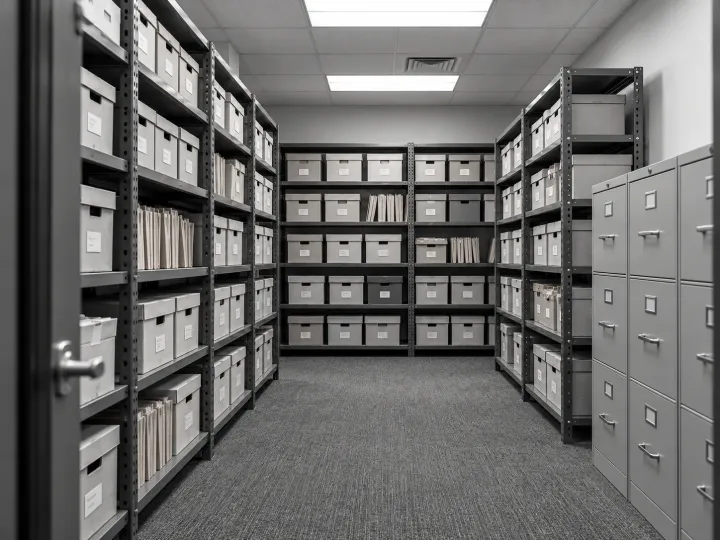
A records room with labeled archive boxes on steel shelves and gray filing cabinets

Why accounting work

Why AI companies want accounting work.

AI models are now judged on real professional work, and accounting is on the list.

How AI gets tested

In September 2025, OpenAI published GDPval, a test of how well AI models handle real-world work. It covers 44 occupations across the 9 industries that each make up more than 5% of US GDP. Accountants and auditors are one of those occupations. The tasks were written by professionals with an average of 14 years of experience, based on real work products.

To get better at work like this, AI companies need real examples of how it’s actually done. That’s why some buyers pay to license copies of real business records.

Source: OpenAI, “Measuring the performance of our models on real-world tasks” (Sept. 25, 2025)

A public example

In its Chapter 11 bankruptcy case, Spirit Airlines offered a de-identified copy of its company data for sale. The package included email, documents, finance and accounting records, and revenue-management data. Customer personal data was excluded. At an August 2026 auction, the winning bid was $10 million. Another bidder later filed an offer of $12.5 million.

As of November 1, 2026, the court had not approved a sale. This was one large airline selling its data in bankruptcy. It says nothing about what any accounting firm’s records are worth, and no amount is promised.

Sources: court filings in Spirit Aviation Holdings, Inc., No. 25-11897 (Bankr. S.D.N.Y.): auction results, Dkt. 1463; competing bid, Dkt. 1556; hearing notice, Dkt. 1695.

What buyers want

What buyers are looking for.

They’re after how the work got done and decided, not who your clients are.

Buyers want to see the trail of real firm work: how a job moved, who signed off, and what the team did when something went sideways. They’re not shopping for a client list. The aim, as they describe it, is to build AI tools that help offices work more productively.

How the work was done

Engagement workpapers, review notes, and the sign-off trail that shows a job actually closed.

How calls got made

Partner review comments, deadline and extension triage, and how the team handled missing client documents.

What actually fixed the problem

Resolved IRS notices, amended returns, and the notes on the response that worked, or the workaround that got a return filed on time. Those records are especially useful.

The connected thread

The same job showing up across email, Teams or Slack chats, practice-management tickets, Microsoft 365 or Google Workspace docs, and the firm’s SOPs.

Client names, Social Security numbers, and amounts typically get scrubbed before records are used. That still doesn’t, by itself, settle professional or tax-return rules. Client information should be included only with each client’s specific written consent, and tax return information never without consent that meets IRS Section 7216. Please check with your own counsel or ethics advisor. We don’t give legal or tax advice.

I go into more detail in the guide What do data buyers want from accounting firms?

The offer

Apply directly, or ask first. A straight answer.

A call isn’t required. Your firm can apply directly with a buyer. If you have questions, a free 15-minute phone call gives you the four things below.

What it costs your firm: nothing.

Balance Sheet Data is paid by the AI data buyer, never by your firm, and only if your firm is accepted. We say this up front so you know exactly how this works.

What your firm keeps: its original records. A buyer licenses a copy.

A plain explanation

How licensing a copy of your records works, in everyday words.

A fit check

We compare your firm with what AI data buyers usually look for.

Help applying

If it looks like a fit, Dan points you to the right application link.

A clear no, if that’s the answer

If your firm isn’t a fit, we’ll say so. No pressure, no follow-up campaign.

The process

Three steps. You decide at each one.

Two accountants at a conference table reviewing reports and files together
  1. STEP 1

    1. Ask (optional)

    Have questions? Book a free 15-minute phone call. Not a sales call, and nothing to buy. No files needed. We cover what buyers look for and whether it’s worth your time. No questions? Skip to step 2.

  2. STEP 2

    2. Apply

    Your firm applies directly with the buyer through its sign-up link. If you talked with Dan first, he’ll point you to the right one.

  3. STEP 3

    3. Review

    The buyer runs its own review. If they want to move forward, they make an offer. Your firm can say yes or no.

Confidentiality

Client confidentiality comes first.

The AICPA has urged CPA firms to be very cautious when asked to share firm data for AI training. Its guidance says firms should decline unless clients give specific consent, that removing names doesn’t make client information non-confidential, and that tax return information raises separate IRS Section 7216 issues. We agree with that caution. Read the article (Journal of Accountancy, Nov 2026).

Firm records first

Balance Sheet Data focuses on your firm’s own operational records: workflows, templates, internal process documents, scheduling, and similar everyday materials.

Client data only with written consent

Client information should be included only with each client’s specific written consent. Tax return information should never be included without consent that meets IRS Section 7216.

Check with your advisor

Before sharing anything, please confirm with your own counsel or ethics advisor. We don’t give legal or tax advice, and nothing here is a promise of compliance.

Privacy

The work stays. The names don’t.

Buyers want to see how real work gets done, not who it was done for. Before any records are used, buyers typically replace names, emails, account numbers and other personal details with placeholders.

Original email

Hi Mark, we finished the 2025 return for Lakeside Dental LLC. Please sign Form 8879 and send it to mark.ellis@lakesidedental.com by April 10. EIN 74-1234567 is on file.

After personal details are removed

Hi [CLIENT], we finished the 2025 return for [BUSINESS]. Please sign Form 8879 and send it to [EMAIL] by [DATE]. EIN [TAX_ID] is on file.

What still matters to a buyer is the workflow: the request, the follow-up and the deadline. Exact privacy steps are set by each buyer and spelled out in their agreement before anything is shared. There’s a fuller picture in what data buyers want from accounting firms.

Example only. Names and numbers are made up.

What stays out

  • Who your clients are, plus their personal and financial details
  • Data your firm only licenses from someone else, such as research services or vendor content
  • Documents covered by a confidentiality agreement or engagement terms that limit sharing
  • Anything a regulator or professional rule requires you to keep confidential
  • Passwords, logins, and bank or account numbers

Your firm decides what’s in and what’s out. This isn’t legal advice, so please check with your own advisors.

The criteria

Who is usually a good fit.

These are the things AI data buyers commonly look for. Every firm still goes through the buyer’s own review, and nothing is promised.

CheckWhat buyers usually look for
Type of firmAn established accounting or CPA firm
LocationBased in the United States
SizeAbout 15 or more full-time desk staff may qualify. Smaller firms are welcome to ask.
RecordsYears of digital records: documents, SOPs, engagement history, email, internal guides
SoftwareAbout 3 or more years on the same main tools. Most everyday software works, so this usually isn’t a hurdle. Common examples: tax and audit (CCH Axcess, UltraTax CS, Lacerte, ProConnect, Drake, ProSeries, ATX, CaseWare); practice management (Karbon, Canopy, TaxDome, Practice CS); client books (QuickBooks, Xero, Sage); email and files (Gmail, Google Workspace, Microsoft 365, Outlook, Dropbox, SharePoint); meetings (Microsoft Teams and similar tools); CRM (HubSpot, Salesforce, GoHighLevel); and support desks (Zendesk, Freshdesk). Other tools are fine too.
LanguageDigital records mostly in English
DecisionSomeone who can decide for the firm applies, or joins the call if you have one
Usually not a fitPaper-only firms, or very new firms without years of digital records
Download the fit checklist (PDF)

One page. Free, no email needed.

Questions

Straight answers.

Is this really free?

Yes. Balance Sheet Data is paid by the AI data buyer, never by your firm, and only if your firm is accepted. There is nothing to buy.

What records do buyers want?

Usually the trail of how the work got done and decided, not who the clients are: workpapers, review notes, email, and the fix that actually worked. Names and amounts typically get scrubbed. If you have questions, a call can cover what fits your firm.

Do we lose our files?

No. Buyers license a copy. Your firm keeps its originals and keeps using them.

What about client privacy?

Buyers say they remove personal and sensitive information. Please review any agreement with your own advisors before signing. We don’t give legal or tax advice.

How much could it be worth?

It depends on the buyer’s own review. No amount is promised, and we won’t guess. Any offer comes from the buyer.

What if we’re not a fit?

We’ll tell you plainly. No pressure and no follow-up campaign.

What if our firm closed, merged, or was acquired?

Some buyers also consider records from firms that are no longer operating. You can apply directly, or ask on a call whether yours might qualify.

Do I have to talk to Dan first?

No. A call is optional. Your firm can apply directly with a buyer. If you have questions, book a free 15-minute call first. No files are needed for the call, and we never ask for passwords.

Is Balance Sheet Data the AI company?

No. Balance Sheet Data is an independent referral business. It is not a buyer and does not speak for any buyer. Your firm applies directly with the buyer.

What about the AICPA guidance and IRS Section 7216?

In November 2026 the Journal of Accountancy (AICPA) urged firms to be very cautious about sharing firm data for AI training. It says firms should decline unless clients give specific consent, that removing names doesn’t make client information non-confidential, and that tax return information raises separate IRS Section 7216 issues. Balance Sheet Data focuses on your firm’s own operational records. Client information should be included only with each client’s specific written consent, and tax return information never without consent that meets Section 7216. Please confirm with your own counsel or ethics advisor before sharing anything. We don’t give legal or tax advice.

Want more detail? See the guides on what buyers look for, data licensing, who owns workpapers, IRC 7216, and “possession isn’t title.”

Portrait of Dan Smedstad, founder of Balance Sheet Data

Who you’ll talk to

A note from Dan.

I’m Dan Smedstad, and I’m based in Katy, Texas.

For more than 35 years I’ve worked as a petroleum landman, handling leases and title records in 12 states. That’s why I understand how an owner can license the right to use something without giving up ownership of it.

Since 2023 I’ve also been a hands-on student of all things AI, and I call myself an AI Nerd.

Licensing a copy of your firm’s records works the same way. Your firm keeps its files. A buyer licenses a copy. I started Balance Sheet Data to help established accounting and CPA firms find out, plainly and for free, whether their old records could qualify.

Dan Smedstad

Founder, Balance Sheet Data · Katy, Texas

I also publish AdvisorAIStack, which ranks AI tools for CPAs and advisors, and GetToolRank, which covers practical AI tools for small-business owners.

Balance Sheet Data is for established accounting and CPA firms. A firm may qualify; nothing is promised. I’m also the Founder & Publisher of iSurge Media. You can read my full bio on iSurge Media.

Know a firm?

Know a business that might qualify?

Not a fit yourself, or not interested? If you know an established firm or business that might be, in accounting or any other industry, I’d be glad to talk with them. And if you’d like to refer businesses on your own, there’s a simple partner program for that too.

Ready for a straight answer?

Check if your firm qualifies and apply directly, or book a free 15-minute call if you have questions first. Not a sales call. Nothing to buy. No files needed. We never ask for passwords.

Download the fit checklist (PDF)